
- Llámanos : +86-15060765919
- Envíenos un correo electrónico : bella@fespower.cn
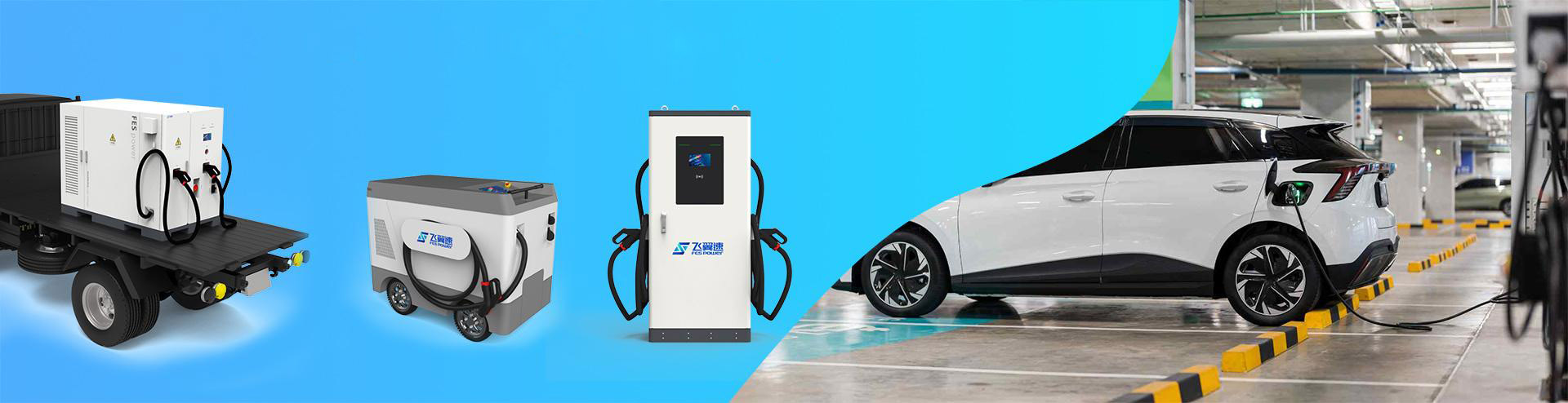
A medida que los vehículos eléctricos continúan creciendo en todo el mundo, los cargadores de vehículos eléctricos ya no son solo un producto: son una infraestructura eléctrica regulada.
Antes de vender o exportar cargadores para vehículos eléctricos, es importante comprender requisitos de certificación es esencial. Los diferentes países requieren diferentes aprobaciones y cada certificación se centra en seguridad, compatibilidad con la red, rendimiento EMC y protección del usuario.
Este artículo proporciona una visión general clara y práctica de las principales certificaciones de cargadores de vehículos eléctricos, a qué países se aplican, qué verifican realmente y cómo los fabricantes pueden prepararse para unas ventas globales que cumplan con las normas.
🔍¿Por qué son obligatorias las certificaciones para los cargadores de vehículos eléctricos?
Los cargadores de vehículos eléctricos se encargan Alto voltaje, alta corriente e interacción directa con vehículos. y redes eléctricas.
Se requieren certificaciones para garantizar que los cargadores:
🔒 Proteger a los usuarios de riesgos de descargas eléctricas e incendios
⚙️ Opere de forma segura con las redes eléctricas locales
📡 No interfiera con otros equipos electrónicos (EMC)
🚗 Comunicarse correctamente con los vehículos eléctricos
📜 Cumplir con las leyes nacionales y las normas de acceso al mercado
Sin la certificación adecuada, los cargadores de vehículos eléctricos No se puede vender, instalar ni asegurar legalmente en la mayoría de los mercados.
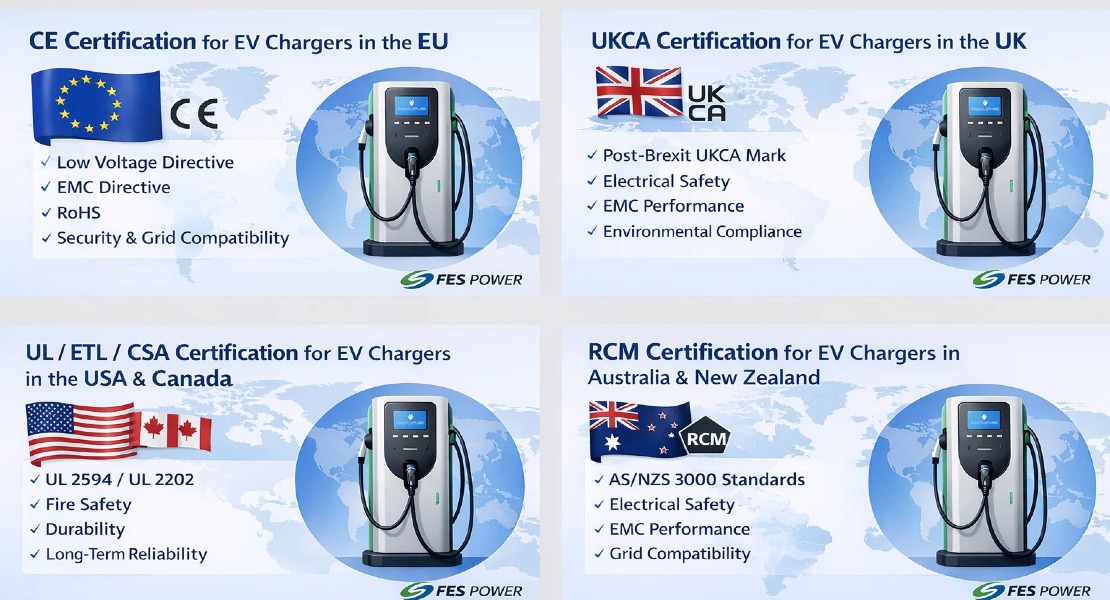
¿Qué es la certificación CE y dónde se requiere?
Marcado CE es obligatorio para los cargadores de vehículos eléctricos vendidos en los países de la Unión Europea y del EEE.
La certificación CE garantiza principalmente el cumplimiento de:
LVD (Directiva de baja tensión) – seguridad eléctrica
Directiva EMC – compatibilidad electromagnética
ROJO (si se utiliza comunicación inalámbrica)
RoHS – restricción de sustancias peligrosas
📌 Mercados aplicables:
Países de la UE, Noruega, Suiza y muchos países que reconocen los estándares de la UE.
🛡️ Lo que realmente garantiza la CE:
Que el cargador de vehículos eléctricos es eléctricamente seguro, cumple con las normas medioambientales y es adecuado para la conexión a los sistemas eléctricos europeos.
¿Qué certificaciones se requieren en el Reino Unido después del Brexit?
El Reino Unido ahora requiere la certificación UKCA en lugar de la CE (con períodos de transición limitados).
UKCA cubre requisitos similares a CE:
Seguridad eléctrica
Rendimiento EMC
Cumplimiento ambiental
📌 Mercado aplicable:
Sólo Reino Unido.
⚠️ Nota importante:
Es posible que los productos certificados únicamente con CE no sean aceptados en el Reino Unido sin la marca UKCA.
¿Qué certificaciones se necesitan para América del Norte?
América del Norte tiene algunos de los la más estricta seguridad estándares a nivel mundial.
UL/ETL (EE. UU.)
UL 2594 (cargadores de CA)
UL 2202 (cargadores rápidos de CC)
CSA (Canadá)
🛡️ Estas certificaciones se centran principalmente en:
Prevención de incendios
Aislamiento y protección del recinto
Prueba de funcionamiento anormal
Durabilidad a largo plazo
📌 Mercados aplicables:
Estados Unidos y Canadá.
⚠️ Diferencia clave:
Las normas norteamericanas suelen ser más conservadoras que las normas IEC utilizadas en otros lugares.
¿Qué pasa con las certificaciones de Australia y Nueva Zelanda?
Australia y Nueva Zelanda requieren RCM (Marca de cumplimiento regulatorio).
RCM garantiza:
Cumplimiento de seguridad eléctrica (normas AS/NZS)
Cumplimiento de EMC
Compatibilidad con la red
📌 Mercados aplicables:
Australia y Nueva Zelanda.
🔌 Los cargadores deben probarse según la norma AS/NZS 3000 y otras normas relacionadas, que difieren de las normas de la UE.
¿Qué certificaciones se aplican a Asia, Oriente Medio y otras regiones?
Distintas regiones adoptan diferentes marcos:
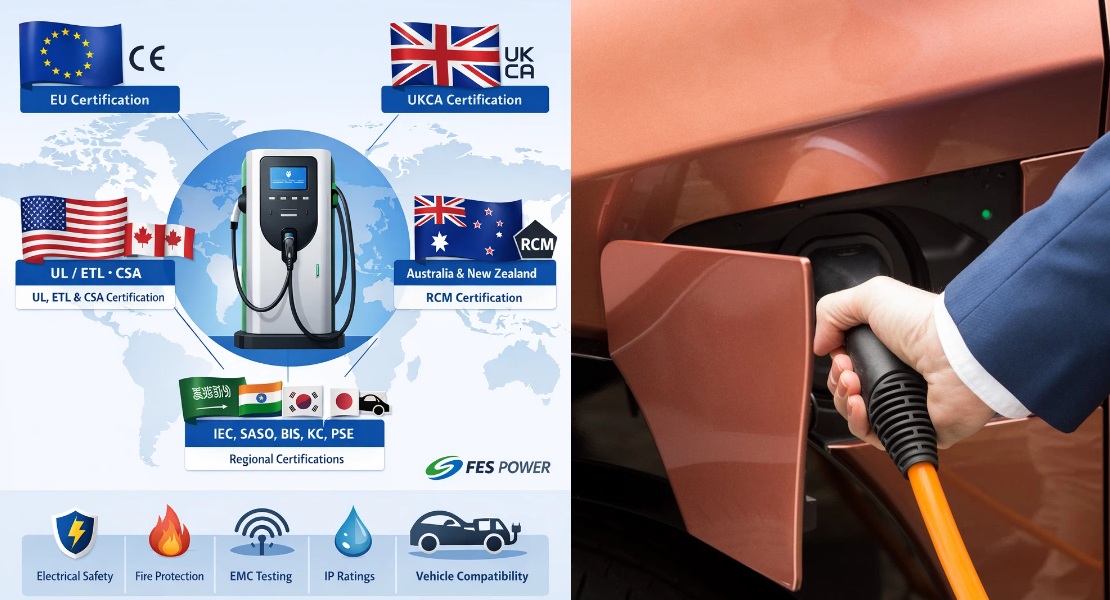
Esquema IEC/CB – Base internacional aceptada por muchos países
G-Mark / SASO (Arabia Saudita)
Banco de Pagos Internacionales (India)
KC (Corea del Sur)
PSE (Japón)
🧩 Práctica común:
Muchos países aceptan Informes de pruebas CB Como base, se pueden exigir desviaciones locales o registro nacional.
¿Qué prueban realmente las certificaciones de cargadores de vehículos eléctricos?
En las distintas regiones, las certificaciones suelen evaluar:
⚡ Seguridad eléctrica (sobrecorriente, puesta a tierra, aislamiento)
🔥 Resistencia al fuego y rendimiento térmico
📡 EMC/EMI (emisiones e inmunidad)
🌧️ Protección del medio ambiente (clasificación IP)
🔄 Protocolos de comunicación (IEC 61851, ISO 15118)
🔧 Resistencia mecánica y durabilidad del envolvente
En breve: Las certificaciones confirman que el cargador es seguro, confiable y compatible con la red eléctrica.
📦¿Cómo pueden los fabricantes preparar los cargadores de vehículos eléctricos para las ventas globales?
Para los exportadores y distribuidores, una preparación inteligente incluye:
Diseño de productos basados en Las normas IEC primero
Secundario arquitectura de certificación múltiple
Utilizando sistemas de energía modulares adaptables a las necesidades regionales
Preparación de documentación, etiquetado y localización de firmware
Este enfoque es significativo reduce la certificación tiempo y costo al ingresar a nuevos mercados.
¿Cómo apoya FES Power las ventas globales de cargadores de vehículos eléctricos certificados?
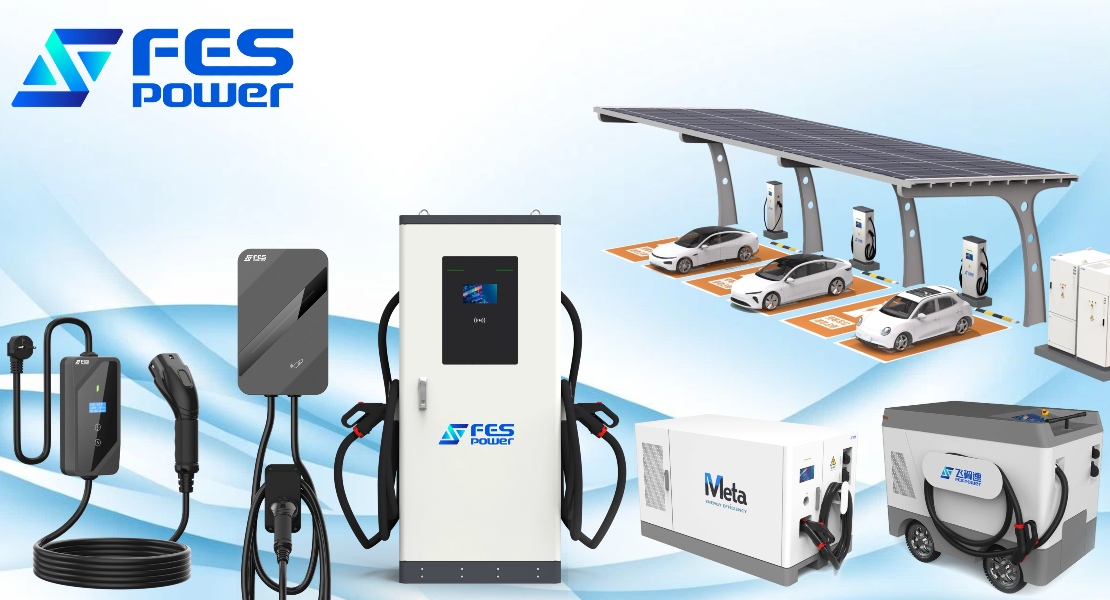
At FES PowerDiseñamos soluciones de carga para vehículos eléctricos con Cumplimiento global en mente.
🔋 Nuestro portafolio de productos incluye:
Cargadores de CA con diseños compatibles con CE/UKCA
Cargadores rápidos de CC alineados con las estructuras IEC y UL
Sistemas modulares de alta potencia que admiten certificación multimercado
🌍Apoyamos:
Arquitectura de hardware lista para certificación
Personalización flexible para estándares regionales
Documentación centrada en la exportación y soporte de cumplimiento
Ya sea para Europa, Reino Unido, Australia, Oriente Medio o mercados emergentesNuestros cargadores están diseñados para ayudar a los socios a ingresar a los mercados con mayor rapidez y confianza.
✅¿Qué debes recordar antes de exportar cargadores para vehículos eléctricos?
La venta internacional de cargadores de vehículos eléctricos no es solo una cuestión de precio o potencia: la certificación es la verdadera clave de entrada al mercado.
✔️ Confirmar siempre requisitos de certificación del país de destino
✔️ Entender qué garantiza realmente cada certificación
✔️ Trabaje con fabricantes que diseñan para el cumplimiento desde el primer día
🌍Con la preparación adecuada y los socios adecuados, las ventas globales de cargadores de vehículos eléctricos se vuelven Claro, compatible y escalable.



 Red IPv6 compatible